Tributes to RAF Chinook crash expert who helped clear pilots

 Chinook Justice Campaign
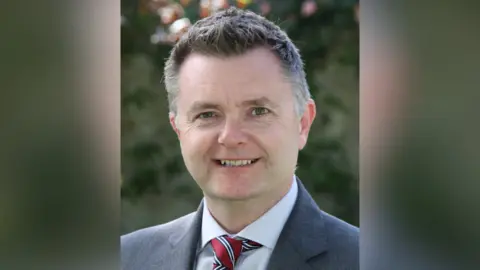
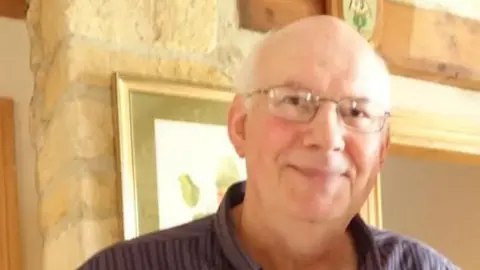
A former aeronautical engineer whose research into the 1994 RAF Chinook disaster led to its two pilots being cleared has died following a short illness.
David Hill spent more than 30 years investigating the helicopter crash on the Mull of Kintyre, which killed 29 people.
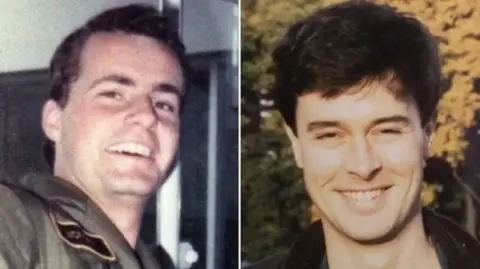
He wrote three books on the tragedy and his technical analysis - that the aircraft should not have been in the air - helped exonerate Flt Lt Jonathan Tapper and Flt Lt Richard Cook from blame after a two-decade long campaign.
Hill, who was 69, died in a palliative care unit in Bristol on 12 January - two months after being diagnosed with cancer.
Campaigners have called for him to be given a posthumous OBE, describing his work as "fundamental" in the bereaved families' fight for justice.
Chris Cook, whose brother Rick was one of the two pilots killed and later cleared of blame, said: "After years of pain, doubt and injustice, David's determination helped restore Rick and Jon's professional reputation and gave our family something we had been denied for far too long: truth, dignity and peace.
"I cannot overstate my admiration for his professionalism as an engineer, but also his determination, resilience and bravery in ensuring the truth was told."
 PA Media
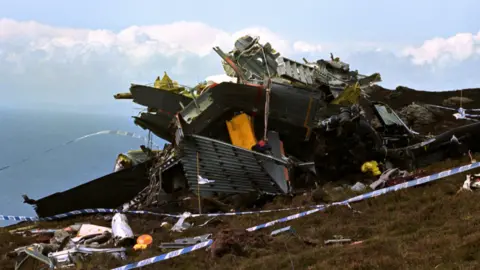
The Chinook Mark 2 helicopter, which was carrying 25 senior intelligence experts, crashed on the remote peninsula on the west coast of Scotland on 2 June 1994.
Alongside the crew, members of the Royal Ulster Constabulary (RUC), MI5 and the Army were onboard.
They had been travelling from RAF Aldergrove, near Belfast in Northern Ireland, to a security conference in Inverness.
Two retired air chief marshals concluded the pilots, Flt Lt Tapper and Flt Lt Cook, were "grossly negligent" following an RAF board of inquiry (BOI) investigation in 1995.
But Hill, alongside others, used their own personal expertise to dig deeper into the case.
He was previously an aeronautical engineer in the Ministry of Defence (MoD) and collated and studied official papers and technical analysis surrounding the crash.
Hill later concluded the helicopter was not airworthy and should not have been allowed to take off.
His evidence helped drive the Chinook Justice Campaign forward ahead of a review of the case by retired judge Lord Alexander Philip in July 2011.
Lord Philip overturned the RAF BOI finding of gross negligence, concluding the air marshals were wrong and received incorrect legal advice at the time.
The families received an apology from then-defence secretary Liam Fox in the House of Commons.
 PA Media
Niven Phoenix, whose father Ian died in the crash, said Hill's contribution to the campaign "could not be overstated".
He said: "David understood the Chinook Mark 2 systems in forensic detail and was meticulous in analysing evidence that others either overlooked or chose not to interrogate.
"He demonstrated, repeatedly and rigorously, that the aircraft's airworthiness, software integration and system certification raised serious and unresolved questions.
"He is a massive loss to the campaign, and we are all devastated by his death."
 PA Media
Families met with government ministers for the first time since the crash in December last year.
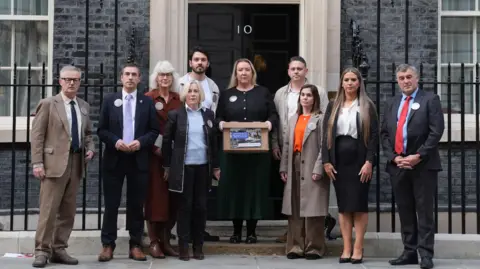
It came two months after a petition calling for a public inquiry into the incident was handed in to Downing Street.
Prime Minister Sir Keir Starmer previously rejected the calls for a judge-led probe.
At the time, Hill said the refusal to grant an inquiry and seal documents until 2094 was a "betrayal of the state".
Retired RAF squadron leader engineer Peter Skea, Hill's best friend for more than 40 years, added: "David's crusade to right wrongs and ensure fairness was a crusade of truth.
"He was dogged in his determination to put the record straight and he abhorred technical incompetence.
"He has exposed the wrongs associated with the Chinook crash. In recognition of this, and his other work, he should be awarded an OBE."